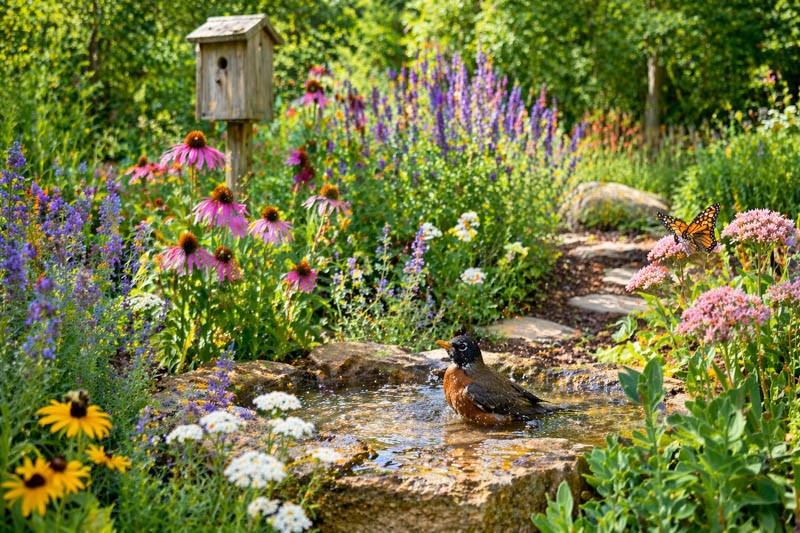
Pollinator gardens provide food, shelter, and seasonal habitat for bees, butterflies, moths, hummingbirds, beetles, and other wildlife. These gardens can fit into large suburban yards, small city lots, school landscapes, community spaces, and apartment patios.
American pollinators face different conditions depending on region, climate, development, and available plant life. A successful garden should focus on locally suitable plants and provide flowers across multiple seasons. Even a small planting area can contribute when it offers dependable resources.
Pollinator gardening does not require an untidy yard. Homeowners can create organized beds with clear edges, repeated colors, and attractive plant groups while supporting local wildlife.
Begin With Regional Plant Research
Plants native to the local region often support insects and wildlife that developed alongside them.
However, a plant native to one part of the United States may not belong in another.
Gardeners should research state, county, or ecological-region recommendations.
Local climate, soil, elevation, rainfall, and sunlight all affect plant performance.
Regionally adapted nonnative flowers may also provide nectar, but native species can support additional life stages for certain insects.
Thoughtful wildlife garden planning can help homeowners connect plant selection with the existing landscape and local growing conditions.
Provide Flowers Across Several Seasons
A garden filled with one spring-blooming plant may offer abundant food for a short period and little later.
Homeowners should select plants with different flowering times.
Early flowers can support pollinators emerging after winter.
Summer blooms provide resources during active growing periods.
Late-season flowers may help insects preparing for colder weather or migration.
A simple bloom calendar can identify seasonal gaps.
Different regions have different growing seasons, so local timing matters.
Plant Flowers in Groups
Pollinators may locate larger flower groups more easily than isolated plants.
Repeating several plants of the same species can create stronger visual impact.
Groups also simplify garden design.
Homeowners can arrange flowers in sections based on height, color, or bloom period.
A small property may use compact clusters rather than long borders.
Plant spacing should still reflect mature size.
Crowded plants may experience reduced airflow and increased competition.
Include Different Flower Shapes
Pollinators have different body sizes, feeding methods, and preferences.
A mixture of flat flowers, clustered blooms, tubular flowers, and open shapes can serve more species.
Butterflies may benefit from flowers that provide landing areas.
Hummingbirds often visit tubular blooms suited to their feeding style.
Small beneficial insects may use shallow flowers.
Plant diversity should remain organized rather than random.
Creative pollinator garden inspiration can help homeowners combine different shapes and colors into a balanced landscape.
Use Native Host Plants
Adult butterflies and moths may drink nectar from many flowers, but their young often depend on specific host plants.
Including host plants supports more than the adult feeding stage.
Some caterpillars naturally eat leaves.
Gardeners should expect limited feeding damage.
Removing every caterpillar may prevent butterflies from completing their life cycle.
Homeowners should research which host plants support local species.
A plant selected for wildlife may not maintain perfect foliage throughout the season.
That does not automatically mean it is unhealthy.
Reduce Unnecessary Pesticide Use
Insect-control products can affect pollinators, especially when applied broadly or during flowering.
Gardeners should identify pests before taking action.
Minor leaf damage may not require treatment.
Physical removal, barriers, healthier plant spacing, and targeted methods may solve some problems.
Even products marketed as natural or organic should be used carefully.
Labels should be followed exactly.
Treatment around open flowers requires particular caution.
A pollinator garden works best when beneficial insects are protected rather than treated as unwanted visitors.
Add a Shallow Water Source Carefully
Pollinators need access to water, but deep open containers may create hazards.
A shallow dish with stones can provide landing areas when maintained correctly.
Water should be changed regularly.
Standing water should not become a mosquito breeding site.
Containers should be cleaned to reduce buildup.
Some gardens may already provide moisture through damp soil or natural features.
Homeowners should keep water sources away from areas where chemicals are used.
Simple maintenance is necessary for any artificial feature.
Leave Some Natural Shelter
Many pollinators use stems, leaf litter, bare soil, wood, or protected garden spaces.
Removing every dry stem and leaf immediately may reduce habitat.
Homeowners can leave selected areas undisturbed while keeping main paths and entrances tidy.
Standing stems may remain through winter and be cut later when local conditions are suitable.
A thin layer of natural material can support wildlife in certain beds.
Excessive debris near structures may still require management.
The goal is a balanced landscape rather than complete neglect.
Include Areas of Open Soil
Some native bees nest in the ground.
A property covered entirely with thick mulch may provide fewer nesting opportunities.
Small patches of well-drained, undisturbed soil can offer habitat where appropriate.
These areas should remain away from heavy foot traffic.
Homeowners should learn to identify harmless native bees before disturbing nests.
Many native species are solitary and behave differently from large social colonies.
Local guidance can help residents understand common pollinators.
Choose Plants for Sun and Soil Conditions
Pollinator value does not replace basic plant needs.
A full-sun flower may grow poorly in deep shade.
A drought-tolerant plant may fail in wet soil.
Gardeners should study light, drainage, wind, and available space.
Healthy plants usually produce stronger growth and more flowers.
Soil testing may help identify major nutrient or pH concerns.
Excess fertilizer can create rapid foliage growth without improving blooms.
Matching plants to the site reduces unnecessary maintenance.
Grow Pollinator Plants in Containers
Apartment residents and homeowners with patios can support pollinators using containers.
Pots should provide enough root space and drainage.
Compact flowers and herbs may work well in small areas.
Several containers grouped together can create a visible feeding area.
Plants may dry faster in pots and need regular moisture checks.
Balcony gardeners should consider wind exposure and building rules.
Container gardens can contribute even when permanent landscape beds are unavailable.
Add Herbs That Produce Flowers
Many culinary herbs attract pollinators when allowed to bloom.
Basil, thyme, oregano, mint, chives, and other herbs may produce useful flowers.
Gardeners can harvest part of the plant while leaving selected stems for wildlife.
Growth habits differ, and spreading herbs may need separate containers.
Herbs should receive suitable sunlight and water.
Flowering herbs can connect food gardening with pollinator support.
They may also fit naturally near patios or kitchen entrances.
Record Wildlife Activity
Gardeners can note which flowers attract visitors during different seasons.
Photographs may help identify bees, butterflies, and other insects.
Records can reveal gaps in bloom periods.
They may also show which plants perform best in local conditions.
Keeping pollinator garden observations can improve future plant selection and seasonal planning.
Homeowners should avoid handling unknown insects.
Observation from a respectful distance is usually enough.
Avoid Invasive Plants
Some attractive flowering plants spread aggressively and affect natural areas.
Gardeners should check regional invasive-species information before planting.
A plant may be acceptable in one state and problematic in another.
Seed spread, underground growth, and local climate influence behavior.
Removing an invasive plant later can become difficult.
Local native alternatives may provide similar color or structure.
Responsible selection supports both the home garden and surrounding environment.
Keep the Garden Attractive Through Structure
Pollinator gardens can include clear borders, paths, shrubs, grasses, stones, and repeated plant groups.
These elements create organization when flowers are not blooming.
A defined edge can make a wildlife garden feel intentional.
Plant labels may help visitors understand the purpose of selected species.
Benches or paths can encourage observation.
Good design supports both people and wildlife.
Balanced nature-friendly garden guidance can help homeowners create habitat without losing practical use of the yard.
Pollinator gardens support local wildlife when they provide diverse flowers, host plants, water, shelter, and safer growing conditions. American homeowners can begin with one sunny bed, a group of native flowers, or several containers. Small, consistent improvements can create meaningful seasonal resources while adding color and movement to the landscape.