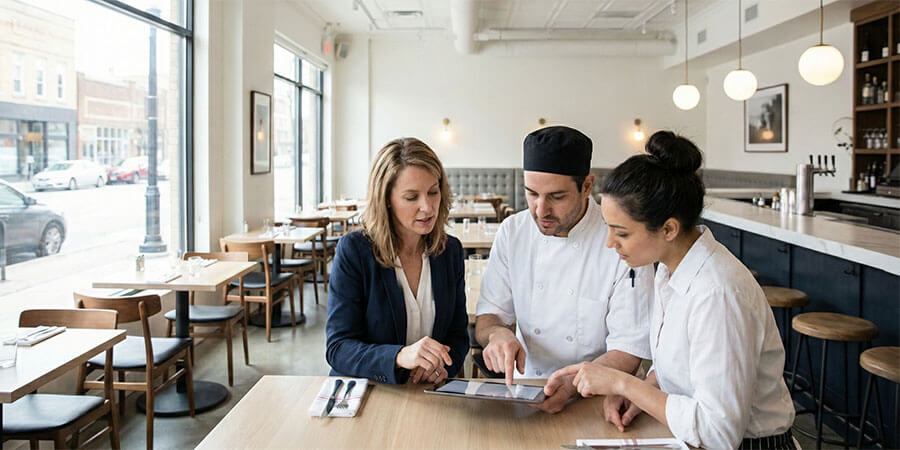
Restaurant staffing affects food quality, service speed, customer satisfaction, employee wellbeing, operating costs, and long-term business stability. Hiring enough people is important, but successful staffing also depends on training, scheduling, communication, leadership, and workplace culture.
The first step is understanding the actual labor needs of the restaurant. A small breakfast cafe requires a different staffing model than a large dinner restaurant, catering operation, fast-casual business, or multi-location brand.
Owners should review customer volume by day and hour rather than creating schedules based only on habit.
Businesses exploring fresh restaurant management ideas can use sales patterns, reservation data, order volume, and seasonal history to estimate staffing needs more accurately.
Overstaffing increases labor costs, while understaffing can create long waits, employee stress, mistakes, and poor customer experiences.
The goal is not to schedule the fewest possible workers. The goal is to schedule enough trained people to operate safely and consistently.
Create clear job descriptions before hiring. Applicants should understand responsibilities, expected hours, physical requirements, required experience, compensation structure, and workplace expectations.
Avoid using vague descriptions that change significantly after employment begins.
Honest information helps candidates decide whether the role fits their needs.
Restaurant job advertisements should explain what makes the workplace worth considering. Reliable schedules, training, advancement opportunities, respectful leadership, employee meals, benefits, and positive team culture may attract suitable applicants.
Do not promise conditions the business cannot maintain.
Hiring should focus on both skill and dependability. Experience is valuable, but an applicant willing to learn may become a strong long-term employee.
Use consistent interview questions for similar roles.
Ask practical questions about availability, teamwork, customer service, problem-solving, and previous responsibilities.
Avoid questions that are unrelated to job performance or inappropriate under employment rules.
Check references when appropriate and follow applicable hiring requirements.
People interested in creative business and workplace guidance often recognize that employee retention begins during hiring, not after problems appear.
Explain the restaurant’s pace, standards, communication style, and scheduling expectations before an employee accepts the position.
New workers should receive structured onboarding. Do not place someone into a busy shift with little instruction and expect immediate success.
Provide an introduction to the restaurant, menu, equipment, safety procedures, workplace policies, communication methods, and team responsibilities.
Use written training materials that employees can review later.
Training should include demonstrations and supervised practice.
A checklist can help managers confirm that important topics were covered.
Assigning an experienced trainer may improve consistency.
Choose trainers who communicate respectfully and follow approved procedures.
Strong performance does not automatically make someone an effective teacher.
Training should continue after the first week. Menu changes, seasonal service, new equipment, safety updates, and employee development require ongoing instruction.
Cross-training can improve scheduling flexibility.
Servers may learn basic hosting responsibilities, while kitchen workers may understand several stations.
Cross-training should not become an excuse to assign unlimited responsibilities without proper compensation or support.
Schedules should be posted with enough notice for employees to plan personal responsibilities.
Frequent last-minute changes can increase stress and turnover.
Use a clear process for requesting time off, changing availability, and exchanging shifts.
Managers should apply scheduling rules consistently.
Employees following popular workplace and restaurant industry discussions may place greater value on predictable hours and respectful communication.
A stable schedule can be as important as other employment benefits.
Avoid repeatedly assigning undesirable shifts to the same people without discussion.
Balance business needs with fairness when possible.
Employee availability should be recorded accurately. Do not assume workers can remain late or arrive early without notice.
Unexpected restaurant demand may require flexibility, but constant emergency scheduling often indicates a planning problem.
Managers should monitor overtime and workload.
High labor hours may reflect inefficient scheduling, understaffing, poor training, or unusual demand.
Reducing hours without examining the cause may create additional problems.
Communication before each shift can improve coordination.
Hold a short meeting to discuss reservations, expected volume, menu changes, unavailable items, special events, staffing concerns, and customer needs.
Keep meetings focused and respectful.
Employees should have a clear way to report problems during the shift.
Managers need to respond rather than dismiss concerns.
Communication between front-of-house and kitchen teams is especially important.
Servers should understand preparation times and unavailable items.
Kitchen staff should receive accurate orders and useful information about modifications.
Avoid creating competition between departments.
Both teams contribute to the same customer experience.
People interested in sharing practical workplace experiences may emphasize the importance of employees feeling heard.
Regular check-ins can identify concerns before they become resignations.
Ask employees what helps them perform well and which problems repeatedly slow work.
Not every suggestion can be adopted, but serious consideration builds trust.
Recognition should be specific. Thank an employee for handling a difficult situation, supporting a coworker, maintaining quality, or improving a process.
Generic praise is less meaningful than clear acknowledgment.
Avoid praising employees only when they work beyond reasonable limits.
Long-term success should not depend on constant personal sacrifice.
Restaurant leaders set the workplace tone. Managers who remain calm, fair, and organized during busy periods help teams respond more effectively.
Public criticism can damage trust.
Correct mistakes privately when possible and focus on the expected behavior.
Serious safety or conduct issues may require immediate action, but communication should remain professional.
Employee conflicts should not be ignored.
Listen to relevant perspectives, document important concerns, and apply policies consistently.
Favoritism can quickly damage morale.
Rules should apply across roles and personal relationships.
Food safety training must remain a priority.
Employees should understand handwashing, temperature control, contamination prevention, cleaning procedures, allergen communication, illness reporting, and local requirements.
Training should be repeated and observed in practice.
Posting instructions is not enough when unsafe habits continue.
Workplace safety also includes equipment use, lifting, slips, burns, cuts, chemical handling, and emergency procedures.
Maintain equipment and repair hazards promptly.
Employees should know how to report unsafe conditions without fear of retaliation.
Breaks and employee meals should follow applicable requirements and restaurant policies.
Busy periods do not remove the need to manage employee wellbeing.
Constantly skipping breaks can increase fatigue and mistakes.
Staffing plans should include backup options for illness, emergencies, seasonal demand, and unexpected absences.
Maintain an updated contact process and a list of trained employees who may accept additional shifts.
Do not pressure sick employees to work when doing so may create health risks.
Retention should be measured. Track turnover by role, location, manager, schedule type, and length of employment.
Exit conversations may reveal patterns.
Employees may leave because of compensation, scheduling, management behavior, limited advancement, workload, transportation, or personal reasons.
Avoid assuming every departure is unavoidable.
Competitive compensation matters, but workplace quality also influences retention.
Review pay practices regularly and communicate changes clearly.
Employees should understand how tips, service charges, bonuses, raises, and promotions work.
Unclear compensation creates distrust.
Advancement paths can encourage employees to remain.
Explain what skills are needed to become a trainer, shift leader, supervisor, kitchen lead, or manager.
Provide development rather than promoting people without support.
Managers also need training.
Leadership requires communication, scheduling, conflict management, coaching, safety awareness, and operational understanding.
A strong employee should not be placed in management without preparation.
Technology can support staffing through scheduling systems, time tracking, communication tools, and labor reports.
Use technology to improve organization rather than creating constant notifications.
Employees should know which communication channels are official.
Personal messages should not become the only way to receive important scheduling information.
Customer demand changes throughout the year.
Prepare for holidays, tourism seasons, school schedules, weather, local events, and major community activities.
Hire and train seasonal staff before peak demand begins.
Waiting until the busiest week creates unnecessary pressure.
Restaurant staffing is not a single hiring project. It is an ongoing system involving people, schedules, expectations, training, safety, compensation, and leadership.
Businesses that treat employees as replaceable may experience repeated hiring costs and inconsistent service.
Restaurants that build clear systems and respectful workplaces are more likely to develop experienced teams.
By hiring honestly, training carefully, scheduling fairly, and responding to employee needs, USA dining businesses can create staffing structures that support both strong operations and better customer experiences.